

RBSE Class 12 Board Exam Preparation Tips for Students

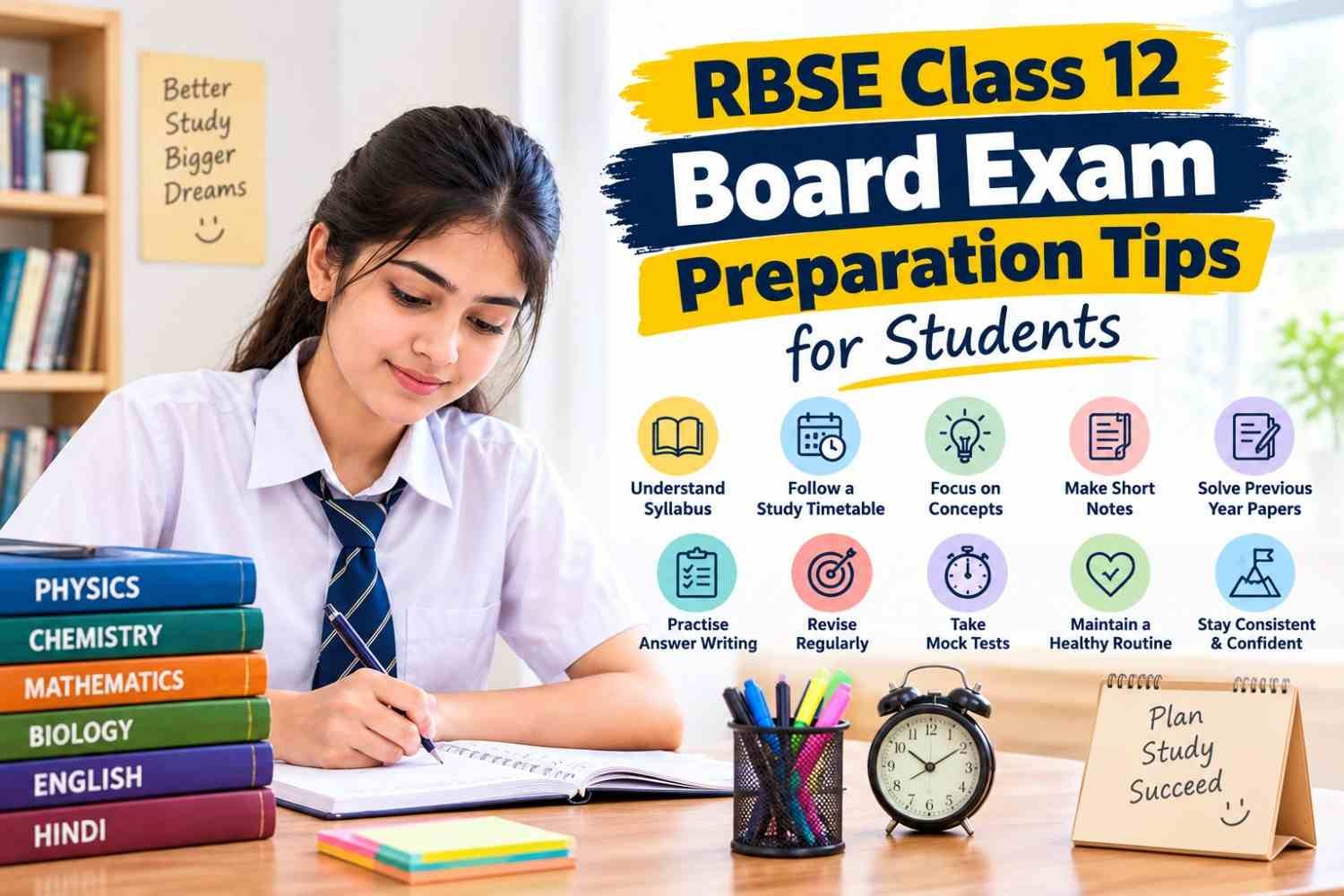
Class 12 is an important academic year for students because board exam marks can influence future courses, college admissions, and career choices. Preparing for the RBSE Class 12 board exams requires more than studying for long hours. Students need a clear study plan, regular revision, practice with previous papers, and a healthy daily routine.
With the right approach, students can cover their syllabus on time and enter the examination with greater confidence. Here are practical RBSE Class 12 board exam preparation tips to help students prepare effectively.
1. Understand the RBSE Class 12 Syllabus
Before starting serious preparation, students should understand the complete syllabus for every subject. Divide each subject into chapters and identify topics that require more time.
Check the prescribed textbooks and understand the question pattern, marking scheme, and important sections. Having a clear idea of the syllabus helps students avoid spending too much time on less important areas.
2. Create a Realistic Study Timetable
A proper timetable makes preparation more organised. Instead of studying one subject for the entire day, divide your study time between different subjects.
For example, students can keep difficult subjects for their most productive study hours and use shorter sessions for revision or easier topics.
A good timetable should include:
- New chapter preparation
- Revision
- Question-solving practice
- Previous-year papers
- Short breaks
- Adequate sleep
The timetable should be realistic enough to follow every day.
3. Focus on Understanding, Not Just Memorising
Simply memorising answers may not be enough for every subject. Try to understand concepts, definitions, formulas, examples, and important points.
For subjects such as Physics, Chemistry and Mathematics, understanding the concepts makes problem-solving easier. For subjects such as History, Political Science, Hindi and English, students should understand the topic and practise writing well-structured answers.
4. Make Short Revision Notes
Short notes can make revision much easier before examinations. Write important formulas, definitions, dates, keywords, concepts and difficult points in a separate notebook.
Avoid copying entire chapters. The purpose of revision notes is to provide a quick reference when you are revising the syllabus.
5. Practise Previous-Year Question Papers
Solving previous-year question papers is one of the most useful ways to understand the examination pattern.
It helps students identify:
- Frequently asked topics
- Common question formats
- Time required to complete the paper
- Areas where they make mistakes
- Answer-writing requirements
Try solving papers within the actual examination time. After completing each paper, check your answers and note the topics that need more preparation.
6. Practise Answer Writing
Knowing the answer and presenting it properly are two different things. Students should practise writing answers in a clear and organised manner.
Use suitable headings, points, diagrams, examples and important keywords wherever required. Keep the answer relevant to the question and avoid unnecessary information.
For long-answer questions, understand what the question is asking before starting your response.
7. Give Extra Time to Difficult Subjects
Every student has subjects or chapters that feel more difficult. Do not keep these topics for the last few weeks.
Identify difficult subjects early and give them regular study time. Even 30–60 minutes of daily practice can make difficult topics easier over time.
Students should also ask teachers for help when they are unable to understand a particular concept.
8. Revise Regularly
Completing the syllabus is only the first step. Regular revision is necessary to remember what you have studied.
A simple revision approach can be:
First revision: Revise the chapter after completing it.
Second revision: Revise it after a few days.
Final revision: Revise important points and questions before the examination.
Regular revision reduces the pressure of trying to remember the complete syllabus at the last moment.
9. Take Mock Tests
Mock tests can help students improve both speed and accuracy. Set a timer and attempt a complete question paper without using notes or study material.
After the test, analyse your performance. Check whether you lost marks because of:
- Lack of preparation
- Incorrect answers
- Poor time management
- Not understanding the question
- Incomplete answers
- Calculation mistakes
Work on these areas during the next practice session.
10. Manage Your Time During the Exam
Time management is important during the actual board examination. Read the question paper carefully before beginning.
Start with questions you are confident about and keep track of the remaining time. Avoid spending too much time on a single difficult question.
Keep a few minutes at the end to review your answers, calculations, diagrams and question numbers.
11. Maintain a Healthy Routine
Long study hours without proper rest can affect concentration. Students should maintain a balanced routine during board preparation.
Get enough sleep, eat nutritious meals, drink sufficient water and take short breaks between study sessions. Light physical activity can also help students stay active and refreshed.
Avoid excessive use of mobile phones and social media during study hours.
12. Stay Consistent and Avoid Last-Minute Preparation
One of the biggest mistakes students make is postponing preparation until the examination is close. Last-minute study can increase stress and make revision difficult.
Instead, focus on studying consistently every day. Even small progress made regularly can result in strong preparation over several months.
Frequently Asked Questions
How many hours should a Class 12 student study for board exams?
There is no fixed number of hours that works for every student. Focus on productive study sessions and maintain a consistent daily routine rather than simply counting study hours.
How can I complete the RBSE Class 12 syllabus on time?
Divide the syllabus into smaller weekly targets and combine new-topic learning with regular revision and question practice. Keep track of your progress and adjust your timetable when required.
Are previous-year papers useful for RBSE Class 12 preparation?
Yes. Previous-year papers help students understand question patterns, practise time management and identify areas that need additional preparation.
When should Class 12 students start revision?
Students should revise each chapter soon after completing it rather than waiting until the entire syllabus is finished. Regular revision makes final exam preparation easier.
How can I reduce exam stress?
Follow a realistic study plan, take short breaks, sleep properly, practise mock tests and avoid last-minute preparation. If a topic is difficult, discuss it with a teacher instead of worrying about it alone.
Conclusion
RBSE Class 12 board exam preparation becomes easier when students follow a structured and consistent approach. Understanding the syllabus, practising questions, revising regularly and managing time effectively can help students prepare with greater confidence.
Students should remember that board preparation is a long-term process. Instead of focusing only on the final marks, concentrate on improving your understanding, practice and consistency every day.